Complete Guide to Windshield Chip Repair in College Station: ROLAGS Standards, Costs, and Texas Heat

October 13, 2026

Complete Guide to Windshield Chip Repair in College Station: ROLAGS Standards, Costs, and Texas Heat

Driving across the Brazos Valley—whether commuting along Harvey Mitchell Parkway (FM 2818), navigating State Highway 6 freight traffic, or running errands near Texas A&M University—exposes vehicle windshields to airborne gravel and road debris. A minor rock chip may seem harmless, but Central Texas thermal extremes can quickly turn a tiny impact pit into a massive crack requiring a $1,200 full replacement. This comprehensive guide covers ROLAGS repair limits, resin injection physics, transparent flat-rate pricing, and how our $40 windshield chip repair service saves your factory glass in just 20 minutes.

Article Reviewed By: Alexander Gonter (Owner) & Jay (Lead Technician)

Specializing in GlasWeld vacuum-pressure resin injection, student vehicle safety, and honest transparent glass repair in College Station, TX.

Can Your Windshield Chip Be Repaired Under ROLAGS Standards?

Windshield chips and cracks can be professionally repaired if they meet strict industry standards established by ANSI/AGSC/NWRD/ROLAGS 002-2022. Bullseye and half-moon breaks are repairable up to 1.0 inch in diameter, star breaks up to 3.0 inches, and combination breaks up to 2.0 inches, provided the damage does not penetrate both glass lites or compromise the inner polyvinyl butyral layer.

Damage Classification & Repair Limits

Damage Type Physical Characteristics Maximum Repairable Limit (ROLAGS) Optimal Resin Viscosity
Bullseye Complete circular cone separation with a dark central impact ring. Up to 1.0 inch (25 mm) diameter Low Viscosity (20–40 cps)
Half-Moon Partial crescent cone separation around the impact point. Up to 1.0 inch (25 mm) diameter Low Viscosity (20–40 cps)
Star Break Multiple radial fracture legs emanating outward from the impact pit. Up to 3.0 inches (75 mm) diameter Ultra-Low Viscosity (10–20 cps)
Combination Break Complex damage featuring both cone separation and radial legs. Body diameter up to 2.0 inches (50 mm) Medium-Low Viscosity (30–50 cps)
Surface Pit Surface void with missing glass at impact without subsurface legs. 0.125 inch to 0.375 inch diameter High Viscosity Pit Filler (1000+ cps)

The Physics of Resin Injection

Automotive windshields utilize a composite laminate structure: two float glass lites bonded by a flexible 0.030-inch Polyvinyl Butyral (PVB) interlayer. When a projectile strikes the outer lite, it creates a cavity filled with trapped air, moisture, and microscopic glass dust. Cheap DIY store kits simply dab surface glue on top, trapping contaminants inside. When Texas temperatures fluctuate, those trapped pockets expand and crack the glass.

Professional repair requires the GlasWeld™ Vacuum-Pressure System:

  • Step 1: Air Evacuation: A specialized mechanical injector creates a vacuum to extract 99% of air and moisture from the micro-fractures.
  • Step 2: Resin Injection: An ultra-low viscosity, acrylic monomeric resin matching the refractive index of glass (1.52) is injected under hydraulic pressure to eliminate light refraction.
  • Step 3: UV Polymerization: Focused ultraviolet light instantly cures and cross-links the resin, permanently bonding the glass faces back to the central PVB interlayer.

How Does Central Texas Heat Impact Windshield Damage?

Central Texas heat can quickly turn a minor windshield chip into a full crack due to thermal shock. Summer ambient temperatures exceeding 100°F push exterior glass surface temperatures above 140°F. When max air conditioning cools the interior cabin below 70°F, the rapid temperature differential forces the outer glass lite to expand while the inner lite contracts, concentrating intense thermal stress at the impact pit.

This thermodynamic stress makes immediate action critical. Drivers commuting along local high-risk corridors—such as State Highway 6, FM 2818 (Harvey Mitchell Parkway), University Drive, and Wellborn Road—frequently experience gravel impacts from commercial hauling and road construction. If left unsealed in the Texas heat, vibration and chassis torsion will cause the fracture legs to run across the entire glass surface, forcing a costly full replacement.

Why Transparent Flat-Rate Cash Pricing Beats Insurance Hassles

At Quicker Sticker, we keep things simple by offering a straightforward $40 flat-rate chip repair with zero insurance paperwork. While some shops bill insurance, filing a comprehensive glass claim can sometimes affect your policy standing or involve tedious phone trees; our direct, low-cost cash pricing lets you fix your windshield instantly without the red tape.

Dealing with insurance carrier approvals often stalls minor repairs while a chip sits out in the Texas sun turning into a spiderweb crack. By providing fast, out-of-pocket service at an affordable $40 flat fee, we bypass the insurance headache entirely—saving you time, protecting your clean driving record, and keeping your factory glass intact.

What Are Your Options: Chip Repair vs. Full Windshield Replacement?

Windshield chip repair costs a flat $40 and takes 20 minutes while retaining your factory window seal and ADAS camera calibration. Full windshield replacement costs $1,200+, takes 2 to 4 hours plus urethane cure time, breaks the original factory pinchweld seal, and often triggers mandatory ADAS camera recalibration fees ranging from $350 to $1,200.

Operational & Cost Comparison Matrix

Metric Windshield Chip Repair Full Windshield Replacement
Out-of-Pocket Cost $40 Flat Rate Cash Pricing $1,200+ (subject to comprehensive deductible)
Service Completion Time 20 Minutes 2 to 4 Hours + Cure Time
Factory Seal Integrity 100% Retained (Pinchweld bond undisturbed) Broken and replaced with aftermarket urethane
ADAS Camera Recalibration Unnecessary (Sensors undisturbed) Mandatory ($350–$1,200 extra charge)

How Does Quicker Sticker Compare to Other Windshield Repair Options in College Station?

When choosing a glass repair shop in the Brazos Valley, drivers generally choose between large national insurance networks, dealership service centers, or local independent specialists. Quicker Sticker differentiates itself through transparent $40 flat-rate cash pricing, a rapid 20-minute turnaround, and zero insurance claim paperwork.

Local Glass Service Comparison Matrix

Service Attribute Quicker Sticker (Independent Specialist) National Glass Chains (e.g., Safelite) Dealership Service Centers
Pricing Structure Transparent $40 flat rate per chip (Cash/Card) Varies by insurance network / Higher cash rates Often marked up ($100+) or outsourced
Turnaround Time 20 minutes (Walk-ins always welcome) Requires scheduled appointment / Drop-off Multi-hour or multi-day scheduling
Insurance Hassle None (Direct, straightforward cash pricing) Heavy focus on insurance claims and phone trees Third-party billing delays
Student & Parent Friendly Tailored for Texas A&M students with Text-to-Pay Standard corporate intake process Rigid scheduling for busy students

Got a Rock Chip on Harvey Mitchell Pkwy?

Stop small chips before Texas heat cracks your glass. $40 flat rate, 20-minute turnaround, walk-ins always welcome!

View Chip Repair Service Details

Frequently Asked Questions About Windshield Chip Repair

How long does windshield chip repair take?

Windshield chip repair takes 20 minutes or less. We designed this service for busy students and professionals in College Station, and no appointment is needed.

Will the chip disappear completely?

The primary goal is structural integrity to prevent cracking. However, our GlasWeld resin usually improves visibility by 80% to 95%, making the blemish nearly invisible to the naked eye.

Can I wash my car immediately after repair?

Yes. We use specialized UV light to cure the resin instantly. You can drive, wash your car, or face Texas rain the moment you leave our bay.

How does the Parent Protocol work for Texas A&M students?

If you are an out-of-town parent, your student can bring the car to us at 2150 Harvey Mitchell Pkwy S. We verify the damage, text you a secure invoice via our Text-to-Pay system, and your student drives away safely as soon as you approve and pay on your phone.
By proadAccountId-389775 • June 15, 2026
Why Is My Steering Wheel Shaking When I Brake? A College Station Driver’s Guide
June 6, 2026
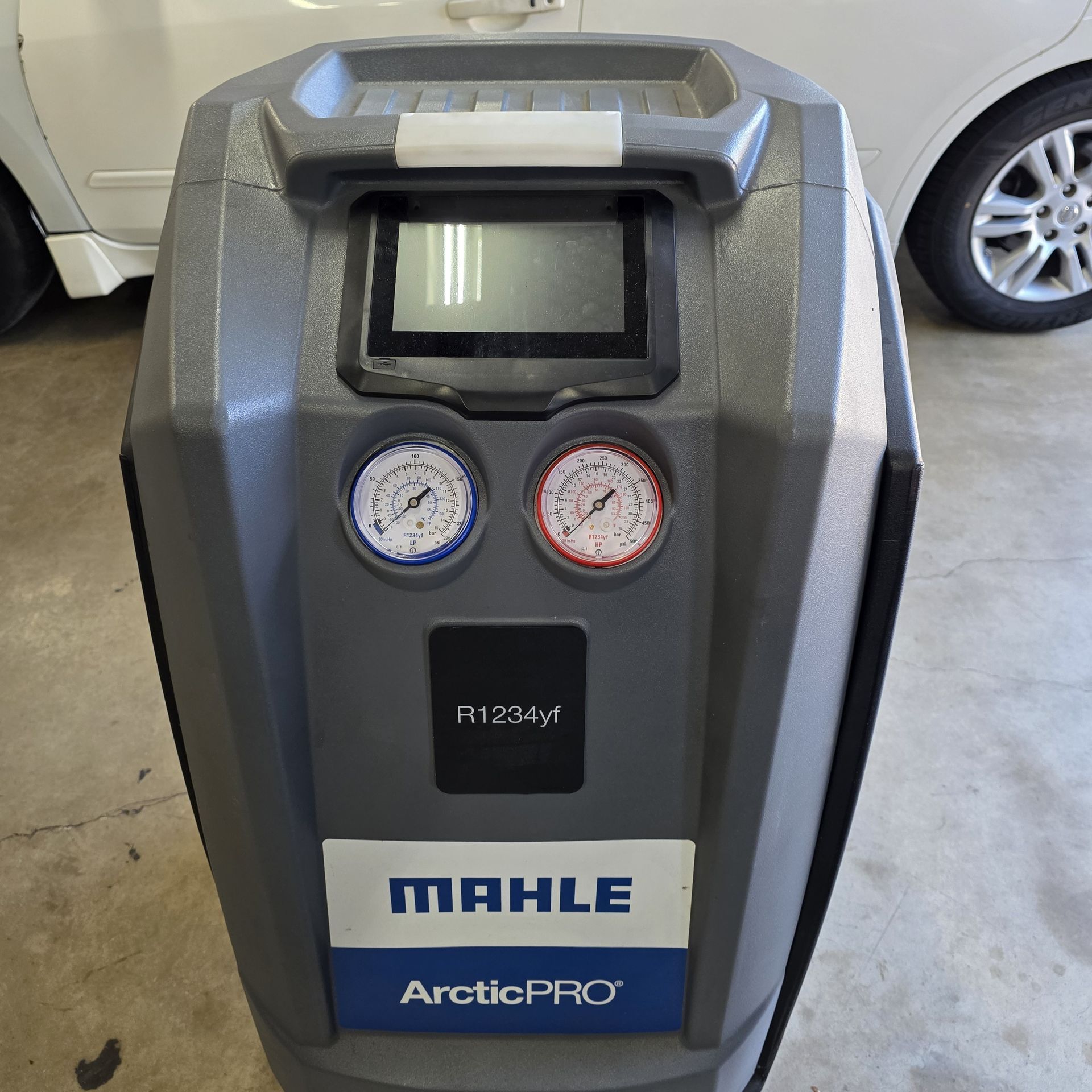
The Hidden Cost of $35 AC Cans: Why DIY Freon Can Kill Your Car’s Air Conditioning We’ve all been there. It’s mid-July in Texas, the thermometer is pushing triple digits, and your car ac blowing hot air makes the cabin feel like a literal pizza oven. Your immediate instinct? Open your phone, look up auto ac repair near me , and brace for a massive bill. But then you see it: a row of bright, $35 "DIY AC Recharge" cans at the local auto parts store promising a cheap, five-minute fix. It looks incredibly simple. You just snap on a plastic quick-connect hose, pull the trigger, and save yourself a trip to the shop. Here is the hard, unvarnished truth from a master diagnostic technician: that $35 can is the most expensive gamble you can make with your vehicle. Trying to bypass a real repair with an over-the-counter chemical band-aid can easily cause a $1,500 catastrophic system failure before the week is out. Driving Blind: The Low-Side Pressure Illusion Your car’s air conditioning isn't just a basic fan blowing over cold liquid. It’s a highly sophisticated, closed-loop network split into two critical halves: the low-pressure side (where heat is absorbed from the cabin) and the high-pressure side (where the compressor pumps and condenses that heat away). These two sides rely on a delicate balance. To service or diagnose an AC system safely, a technician must monitor both pressures simultaneously. Those $35 store-bought cans? They only have a single, cheap mechanical gauge that hooks exclusively onto your low-side service port. Charging your AC this way is the mechanical equivalent of driving down the highway blindfolded. You are missing half of the equation. While the low-side gauge might show a deceptively normal reading, your high-side pressure could be dangerously skyrocketing behind the scenes due to a bad cooling fan, a clogged condenser, or an internal blockage. Dumping more refrigerant into that mix without seeing the high-side reality is a fast track to blowing out lines, popping pressure relief valves, or destroying your compressor entirely. "Automotive AC systems are sealed loops—they don't consume freon like an engine consumes oil. If your system is low, you have a physical leak that requires a targeted diagnosis, not an unmetered chemical top-off." Two Ways a $35 Can Destroys Your AC When a driver blindly introduces store-bought freon into an already unstable system, it usually triggers one of two severe mechanical disasters: 1. Liquid Slugging (Compressor Suicide) Modern vehicles operate on remarkably tight tolerances. Instead of the heavy-capacity systems of the past, today's automotive loops require a highly precise volume of refrigerant—often specified down to the exact individual gram weight. When you try to eyeball it using a generic, color-coded gauge, you almost always overcharge the system. This leads to a nightmare scenario called "liquid slugging". Your AC compressor is engineered strictly to compress refrigerant in its gaseous state. Gasses compress easily; liquids do not. When an overcharged system forces liquid refrigerant back down into the compressor intake, the compressor tries to squeeze a solid volume. The internal reed valves shatter instantly, pistons snap, and the entire compressor suffers total structural failure. This internal explosion flings sharp metallic shrapnel screaming through your lines, permanently contaminating every single component in the loop. 2. The Nightmare of Chemical "Leak Sealant" Gunk To make their products more appealing, DIY chemical manufacturers love to pack their canisters with proprietary "stop-leak" compounds. They claim it seals small leaks from the inside out. Sounds great on paper, but it is a death sentence for your climate control network. These chemical sealants are engineered to react with air and moisture to form a hard, epoxy-like scab. Guess what happens when your AC system has a physical leak? Atmospheric air and humidity migrate inside through the opening. The moment that DIY chemical hits the internal moisture, it hardens into a thick, glue-like sludge. It permanently clogs the microscopic passages of your expansion valve, blankets the internal walls of the evaporator core, and chokes the condenser. Worse yet, this sticky contaminant completely ruins professional recovery equipment. Independent shops must test for these sealants before connecting their machines. If stop-leak is detected, the shop will refuse to service the vehicle until you replace the entire contaminated system at an immense material cost, because hookups would destroy their multi-thousand-dollar equipment. The New Car Dilemma: R134a vs. R1234yf If your car was built over the last decade, the stakes are even higher. While older cars widely utilized R134a refrigerant, nearly all vehicles manufactured after 2015 have transitioned to a highly engineered, eco-friendly chemical compound known as R1234yf. Executing an r1234yf ac service requires an entirely different tier of technical competence and specialized equipment. This modern refrigerant is incredibly sensitive to minor variations in system volume. Trying to hack a post-2015 system with a generic parts-store can can instantly throw the vehicle's onboard climate computer into a hard fault code, bricking the entire climate control network and invalidating your factory or extended warranty. These systems don't tolerate guesswork; they demand automated Recovery, Recycling, and Recharging (RRR) stations to manage the loop under exact parameters. Conclusion: A Diagnostic Test is Cheap Insurance When your vents start blowing warm, a vehicle diagnostic test isn’t an unnecessary expense—it is the ultimate form of low-cost insurance for your car’s longevity. A simple pressure drop could be caused by an electrical relay failure, a blown fuse, a failing cooling fan, or a tiny O-ring leak that costs pennies to swap out. Dumping a DIY can into a system with an underlying electrical issue won't fix a thing; it will just result in an expensive overcharged blowout. When you schedule a definitive car ac recharge college station service at a premier independent facility, our master technicians take the guesswork completely out of the equation. We don't guess—we measure: We isolate and record both high and low-side pressures simultaneously. We safely extract and filter your remaining refrigerant to measure the exact volume loss. We inject specialized UV contrast dye to pinpoint the exact root cause of the leak. We run a prolonged deep vacuum to boil out destructive moisture before recharging the loop back to the exact OEM factory gram specification. Don't Suffer Through the Texas Summer Heat. If your AC is not blowing cold, set up an appointment, or give us a call today! Do not gamble your compressor, your climate control network, and your hard-earned money on a temporary chemical quick fix. If your AC is losing its edge, let our master diagnostic technicians restore your system safely, correctly, and permanently. Text our service desk directly or book your precision AC diagnostic appointment online now before the next major heatwave catches you off guard.
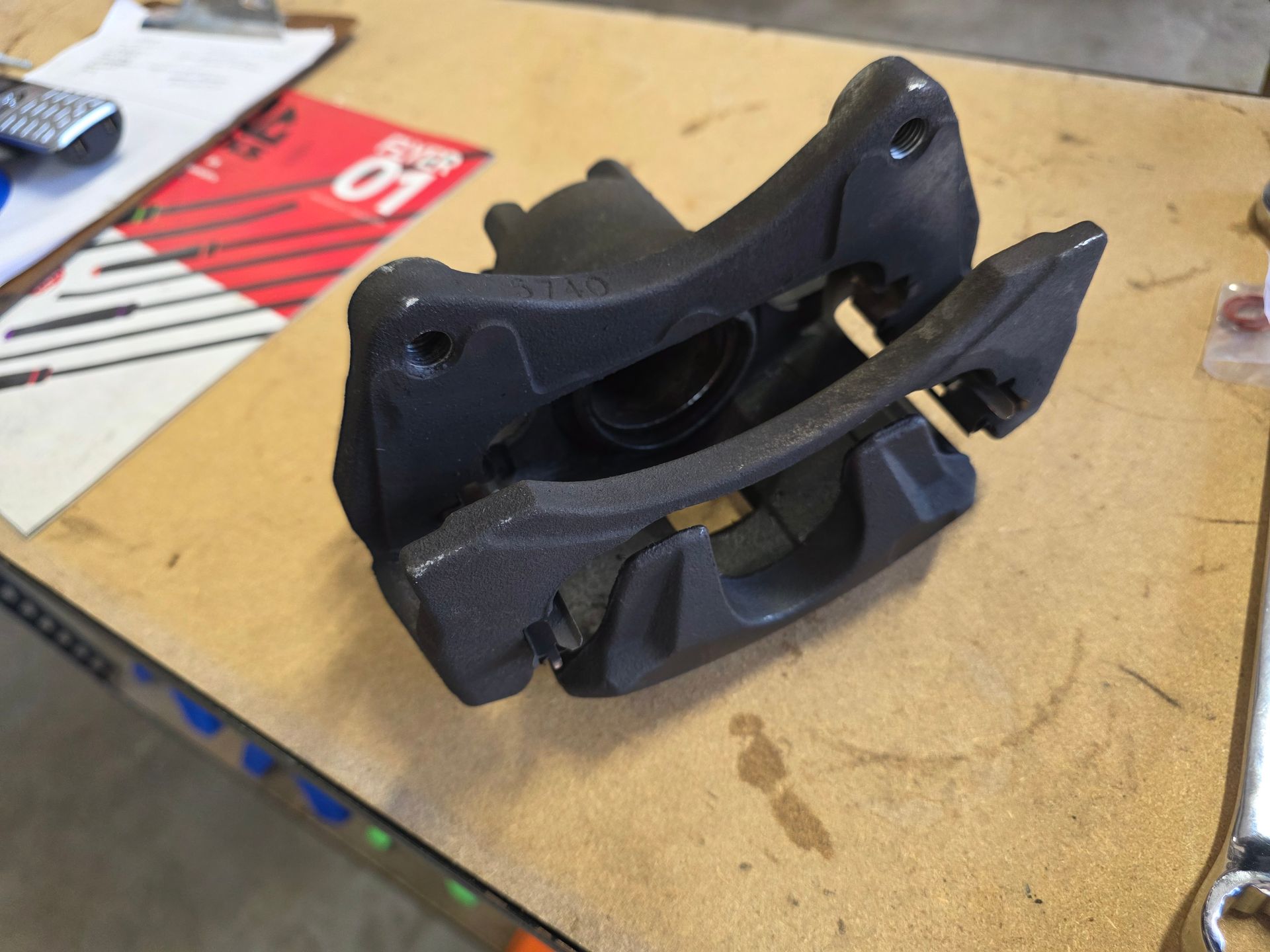
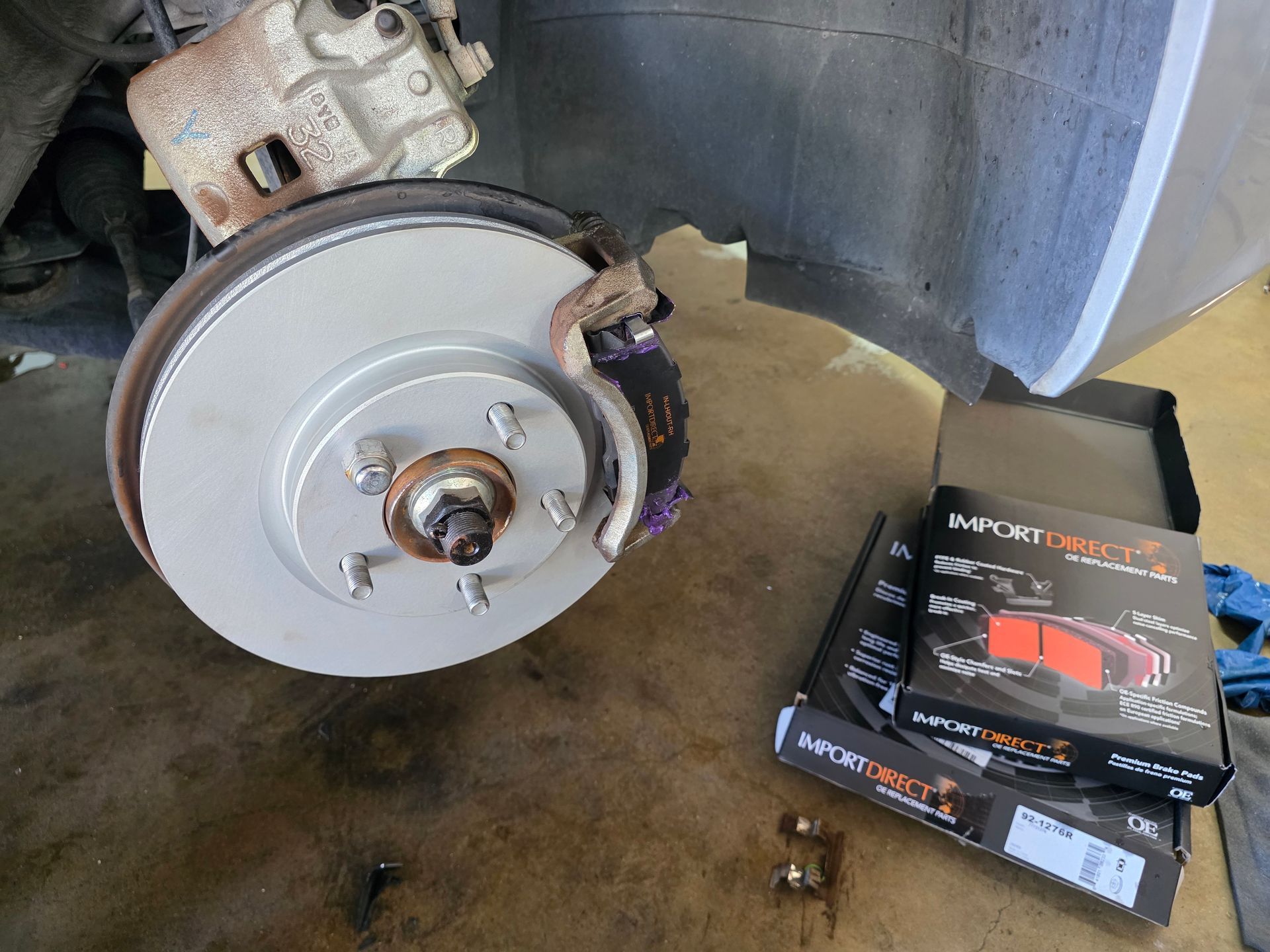
Seized brake caliper
April 23, 2026
Avoid overpriced brake repairs in College Station. Learn the 4 red flags of dishonest shops, from "magic" price hikes to unnecessary parts, and see how Quicker Sticker does it differently.
Quicker Sticker Modern Auto Repair's Full Service Maintenance
April 21, 2026
Learn the difference between conventional, synthetic blend, full synthetic, and 100% synthetic oil changes. Quicker Sticker in College Station explains which oil protects your engine best.
By proadAccountId-389775 • March 24, 2026
The Hidden Cost of the "Brake Slap": Why Surface Preparation is Non-Negotiable
February 4, 2026
Don't be fooled by a logo. Learn the difference between a true ASE Blue Seal shop and competitors using the "One-Tech Loophole." See why Digital Video Evidence is the only trust signal that matters.
January 15, 2026
Confused about the 2025 Texas inspection laws? If your car is registered in Houston or Dallas but lives in College Station, read this before you drive home for a test.
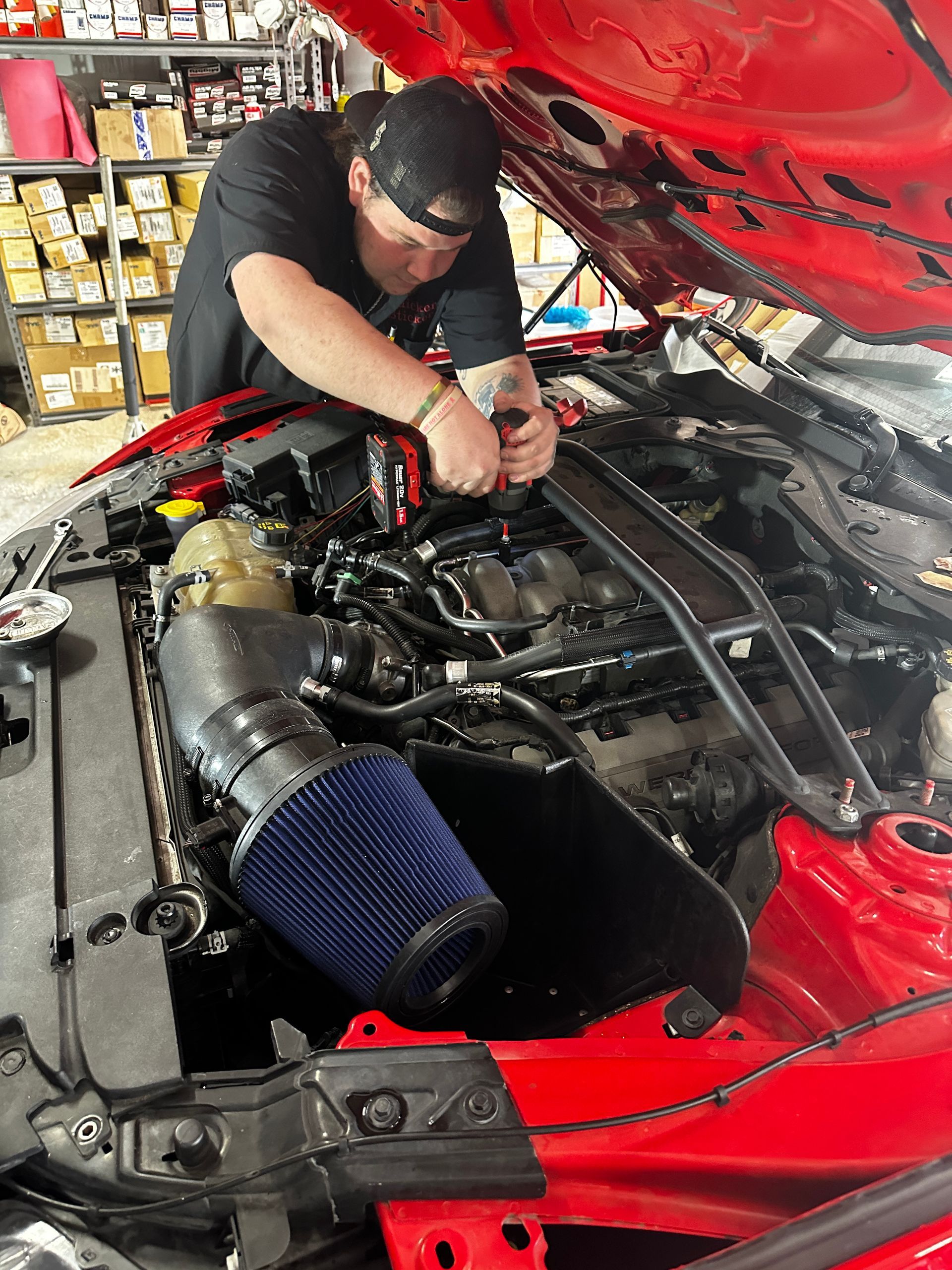
Technician performing repairs on vehicle
January 5, 2026
Most shops claim perfection. We claim honesty. Read the story of the $3,000 mistake Quicker Sticker made, and why finding a mechanic who admits fault is the safest choice for your car.
December 29, 2025
More Than an Oil Change: Why Modern Tech & Modern Mechanics Agree on Full-Service