Why You Should Hire a Mechanic Who Admits They Are Wrong (And Why "Perfect" Shops Are Lying)

January 5, 2026

Who Should You Trust?

In the auto repair industry, nobody wants to talk about mistakes. If you look at the websites of most shops in College Station, you’ll see 5-star badges, "Satisfaction Guarantees," and claims of perfection.

But cars are complex machines. Humans are imperfect. And sometimes, things go wrong.

At Quicker Sticker, we believe there is a massive difference between a "Good Shop" and an "Honest Shop." A good shop fixes cars. An honest shop fixes cars, but also fixes situations when they go sideways.

Here is the truth about what happens when we mess up, and why finding a shop that admits fault is the most profitable decision you can make for your vehicle.


The $3,214.17 Mistake

I want to share a story we aren't "supposed" to share in marketing.

Recently, we had an incident where an employee accidentally backed one customer's car into another customer’s car in our lot. It was a nightmare scenario. Nobody was hurt, but metal was bent.

A "dishonest" shop might try to buff it out and hide it. Or they might try to blame it on a "blind spot" and fight the insurance.

We didn't hesitate. We immediately called both owners. We paid $3,214.17 out of our own pocket to repair both vehicles to factory standards. We also paid for rental cars for both customers so their lives weren't interrupted.

Did it hurt our bottom line that month? Absolutely. But we slept well at night. And more importantly, those customers know that if anything ever happens to their car under our watch, we don't make excuses. We write the check.

The Rule: If we damage it, we pay for it. That is the only way we operate.


The "Free Diagnosis" Trap

You often see shops advertising "Free Diagnosis." Be careful. In my experience, "Free" often ends up being the most expensive word in auto repair.

We see shops that don't charge for the diagnostic, but then they "throw parts" at the car because they didn't spend the time to actually test it. They guess it’s the alternator. Then the battery. Then the starter.

You end up paying for three repairs to fix one problem. At Quicker Sticker, we charge for our expertise because we value accuracy. We would rather you pay a small fee to know exactly what is wrong than a large fee to fix things that aren't broken.


The "Loyalty Dividend" (Why You Need a Home Shop)

There is a Kia that visits our shop about once a year. The owner came to me years ago because his turn signal stopped working. Six other mechanics couldn't figure it out.

I found the issue in 5 minutes—a contact issue in the bulb socket. Every year, when it acts up, he brings it in. I disassemble it, clean the contacts, and reassemble it. I charge him $0.

Why? Because he is a loyal customer. When you hop from shop to shop looking for the cheapest oil change coupon, you are a transaction. When you stick with one honest shop, you are a relationship.

The Perks of Loyalty:

  • The "On The House" Fixes: We regularly see headlight bulbs installed incorrectly by other places, damaging the lens. For our regulars, we often just fix it for free without even mentioning it.
  • The "Gray Area" Warranty: Our standard warranty is 24 Months / 24,000 Miles. But if a loyal customer comes in at 25,000 miles with a failed part, we are far more likely to honor that warranty than if it’s a stranger we’ve never seen before.


Why Our "Inspection Station" Roots Matter

Long before we were a full-service repair shop, we were a State Inspection facility. This required us to be licensed by the State of Texas. It meant background checks, strict adherence to state laws, and fines if we didn't have a specific battery in our tester or a mark in the parking lot painted correctly.

That background built a culture of Discipline and Methodical Process. We don't cut corners because we were trained in an environment where the State was watching. We bring that same "Audit-Ready" mindset to your brake repair or engine diagnostic.


The Bottom Line

We aren't perfect. But we are transparent. Whether we are in your driveway with our Mobile Service or in our bays on Harvey Mitchell Pkwy, you can trust that if we make a mistake, we will own it.

If you are looking for a shop that values Truth over Perfection, we’d love to earn your business.
Book Your Appointment Now
By proadAccountId-389775 June 15, 2026
Why Is My Steering Wheel Shaking When I Brake? A College Station Driver’s Guide
June 6, 2026
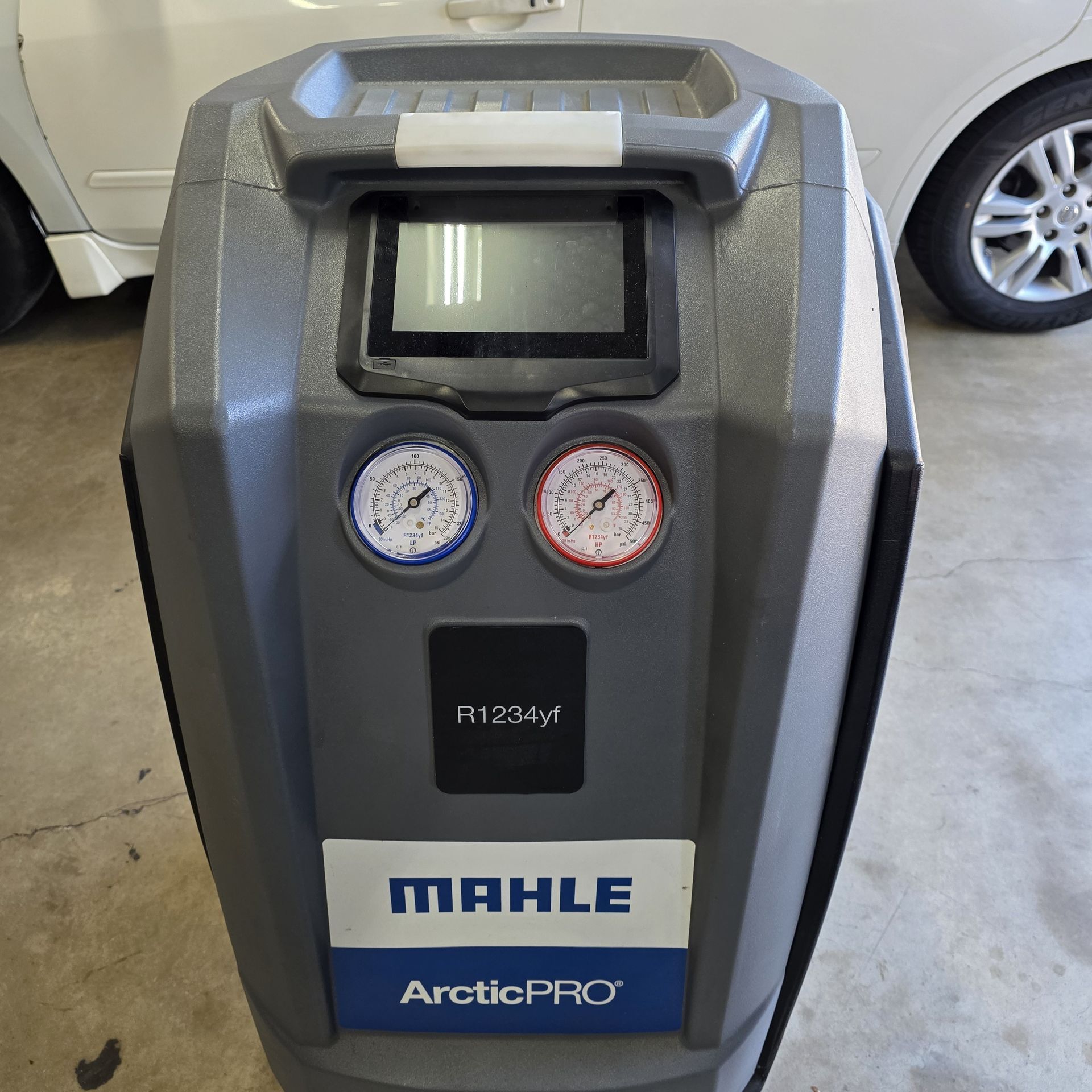
The Hidden Cost of $35 AC Cans: Why DIY Freon Can Kill Your Car’s Air Conditioning We’ve all been there. It’s mid-July in Texas, the thermometer is pushing triple digits, and your car ac blowing hot air makes the cabin feel like a literal pizza oven. Your immediate instinct? Open your phone, look up auto ac repair near me , and brace for a massive bill. But then you see it: a row of bright, $35 "DIY AC Recharge" cans at the local auto parts store promising a cheap, five-minute fix. It looks incredibly simple. You just snap on a plastic quick-connect hose, pull the trigger, and save yourself a trip to the shop. Here is the hard, unvarnished truth from a master diagnostic technician: that $35 can is the most expensive gamble you can make with your vehicle. Trying to bypass a real repair with an over-the-counter chemical band-aid can easily cause a $1,500 catastrophic system failure before the week is out. Driving Blind: The Low-Side Pressure Illusion Your car’s air conditioning isn't just a basic fan blowing over cold liquid. It’s a highly sophisticated, closed-loop network split into two critical halves: the low-pressure side (where heat is absorbed from the cabin) and the high-pressure side (where the compressor pumps and condenses that heat away). These two sides rely on a delicate balance. To service or diagnose an AC system safely, a technician must monitor both pressures simultaneously. Those $35 store-bought cans? They only have a single, cheap mechanical gauge that hooks exclusively onto your low-side service port. Charging your AC this way is the mechanical equivalent of driving down the highway blindfolded. You are missing half of the equation. While the low-side gauge might show a deceptively normal reading, your high-side pressure could be dangerously skyrocketing behind the scenes due to a bad cooling fan, a clogged condenser, or an internal blockage. Dumping more refrigerant into that mix without seeing the high-side reality is a fast track to blowing out lines, popping pressure relief valves, or destroying your compressor entirely. "Automotive AC systems are sealed loops—they don't consume freon like an engine consumes oil. If your system is low, you have a physical leak that requires a targeted diagnosis, not an unmetered chemical top-off." Two Ways a $35 Can Destroys Your AC When a driver blindly introduces store-bought freon into an already unstable system, it usually triggers one of two severe mechanical disasters: 1. Liquid Slugging (Compressor Suicide) Modern vehicles operate on remarkably tight tolerances. Instead of the heavy-capacity systems of the past, today's automotive loops require a highly precise volume of refrigerant—often specified down to the exact individual gram weight. When you try to eyeball it using a generic, color-coded gauge, you almost always overcharge the system. This leads to a nightmare scenario called "liquid slugging". Your AC compressor is engineered strictly to compress refrigerant in its gaseous state. Gasses compress easily; liquids do not. When an overcharged system forces liquid refrigerant back down into the compressor intake, the compressor tries to squeeze a solid volume. The internal reed valves shatter instantly, pistons snap, and the entire compressor suffers total structural failure. This internal explosion flings sharp metallic shrapnel screaming through your lines, permanently contaminating every single component in the loop. 2. The Nightmare of Chemical "Leak Sealant" Gunk To make their products more appealing, DIY chemical manufacturers love to pack their canisters with proprietary "stop-leak" compounds. They claim it seals small leaks from the inside out. Sounds great on paper, but it is a death sentence for your climate control network. These chemical sealants are engineered to react with air and moisture to form a hard, epoxy-like scab. Guess what happens when your AC system has a physical leak? Atmospheric air and humidity migrate inside through the opening. The moment that DIY chemical hits the internal moisture, it hardens into a thick, glue-like sludge. It permanently clogs the microscopic passages of your expansion valve, blankets the internal walls of the evaporator core, and chokes the condenser. Worse yet, this sticky contaminant completely ruins professional recovery equipment. Independent shops must test for these sealants before connecting their machines. If stop-leak is detected, the shop will refuse to service the vehicle until you replace the entire contaminated system at an immense material cost, because hookups would destroy their multi-thousand-dollar equipment. The New Car Dilemma: R134a vs. R1234yf If your car was built over the last decade, the stakes are even higher. While older cars widely utilized R134a refrigerant, nearly all vehicles manufactured after 2015 have transitioned to a highly engineered, eco-friendly chemical compound known as R1234yf. Executing an r1234yf ac service requires an entirely different tier of technical competence and specialized equipment. This modern refrigerant is incredibly sensitive to minor variations in system volume. Trying to hack a post-2015 system with a generic parts-store can can instantly throw the vehicle's onboard climate computer into a hard fault code, bricking the entire climate control network and invalidating your factory or extended warranty. These systems don't tolerate guesswork; they demand automated Recovery, Recycling, and Recharging (RRR) stations to manage the loop under exact parameters. Conclusion: A Diagnostic Test is Cheap Insurance When your vents start blowing warm, a vehicle diagnostic test isn’t an unnecessary expense—it is the ultimate form of low-cost insurance for your car’s longevity. A simple pressure drop could be caused by an electrical relay failure, a blown fuse, a failing cooling fan, or a tiny O-ring leak that costs pennies to swap out. Dumping a DIY can into a system with an underlying electrical issue won't fix a thing; it will just result in an expensive overcharged blowout. When you schedule a definitive car ac recharge college station service at a premier independent facility, our master technicians take the guesswork completely out of the equation. We don't guess—we measure: We isolate and record both high and low-side pressures simultaneously. We safely extract and filter your remaining refrigerant to measure the exact volume loss. We inject specialized UV contrast dye to pinpoint the exact root cause of the leak. We run a prolonged deep vacuum to boil out destructive moisture before recharging the loop back to the exact OEM factory gram specification. Don't Suffer Through the Texas Summer Heat. If your AC is not blowing cold, set up an appointment, or give us a call today! Do not gamble your compressor, your climate control network, and your hard-earned money on a temporary chemical quick fix. If your AC is losing its edge, let our master diagnostic technicians restore your system safely, correctly, and permanently. Text our service desk directly or book your precision AC diagnostic appointment online now before the next major heatwave catches you off guard.
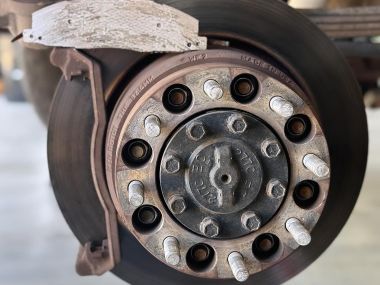
Seized brake caliper
April 23, 2026
Avoid overpriced brake repairs in College Station. Learn the 4 red flags of dishonest shops, from "magic" price hikes to unnecessary parts, and see how Quicker Sticker does it differently.
Quicker Sticker Modern Auto Repair's Full Service Maintenance
April 21, 2026
Learn the difference between conventional, synthetic blend, full synthetic, and 100% synthetic oil changes. Quicker Sticker in College Station explains which oil protects your engine best.
By proadAccountId-389775 March 24, 2026
The Hidden Cost of the "Brake Slap": Why Surface Preparation is Non-Negotiable
February 4, 2026
Don't be fooled by a logo. Learn the difference between a true ASE Blue Seal shop and competitors using the "One-Tech Loophole." See why Digital Video Evidence is the only trust signal that matters.
January 15, 2026
Confused about the 2025 Texas inspection laws? If your car is registered in Houston or Dallas but lives in College Station, read this before you drive home for a test.
December 29, 2025
More Than an Oil Change: Why Modern Tech & Modern Mechanics Agree on Full-Service
Badge for a Carfax Car Care Service Center
December 10, 2025
Learn about the advantages of having your vehicle repaired and maintained at a professional auto repair facility, and why you should avoid a "shade-tree" mechanic.
Technician performing electrical work
September 29, 2025
Is your car having trouble starting or are your lights flickering? Learn the common signs your vehicle needs electrical system repairs and what to do next.