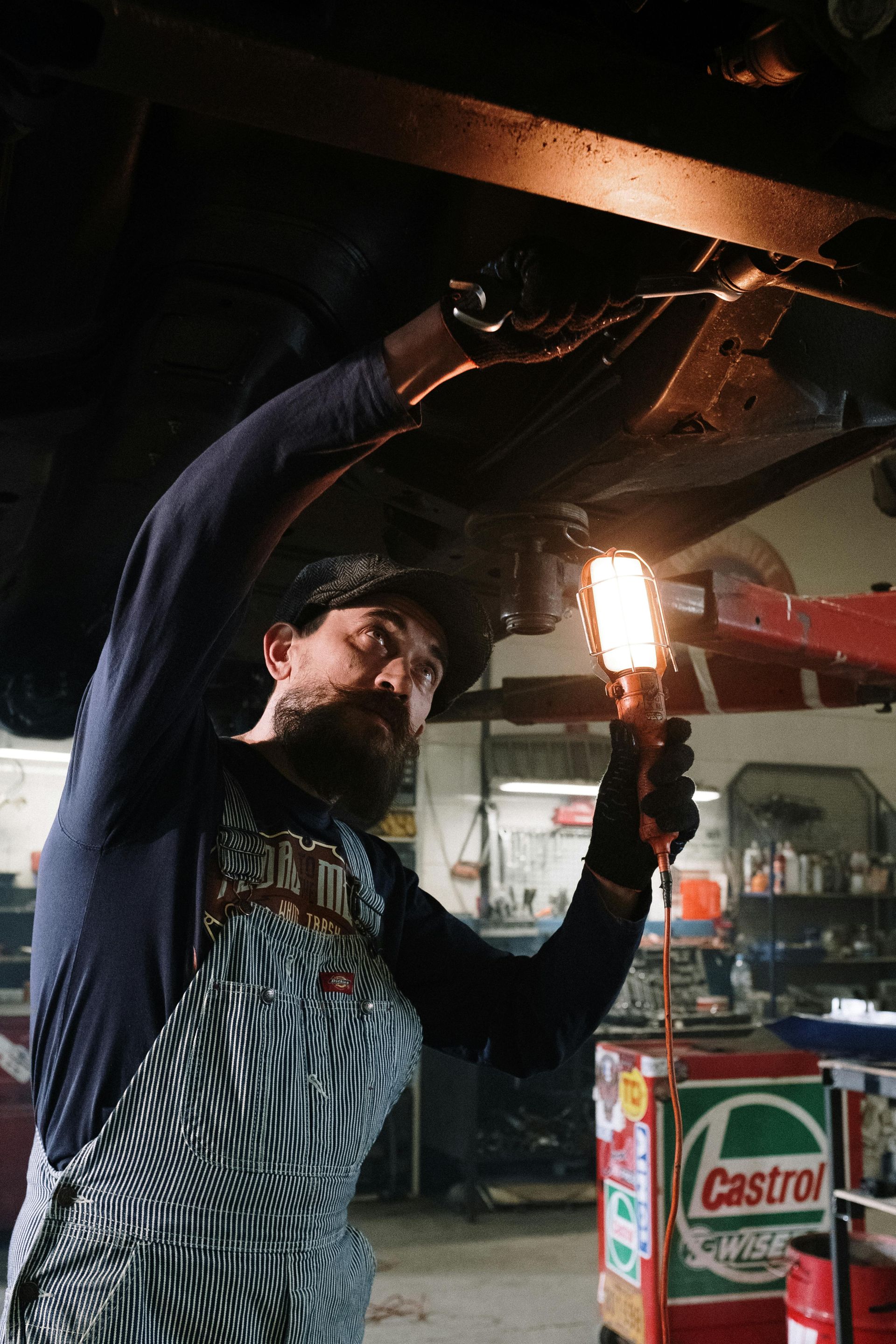
Why Your Car Shakes When You Brake in College Station
Why Is My Steering Wheel Shaking When I Brake? A College Station Driver’s Guide
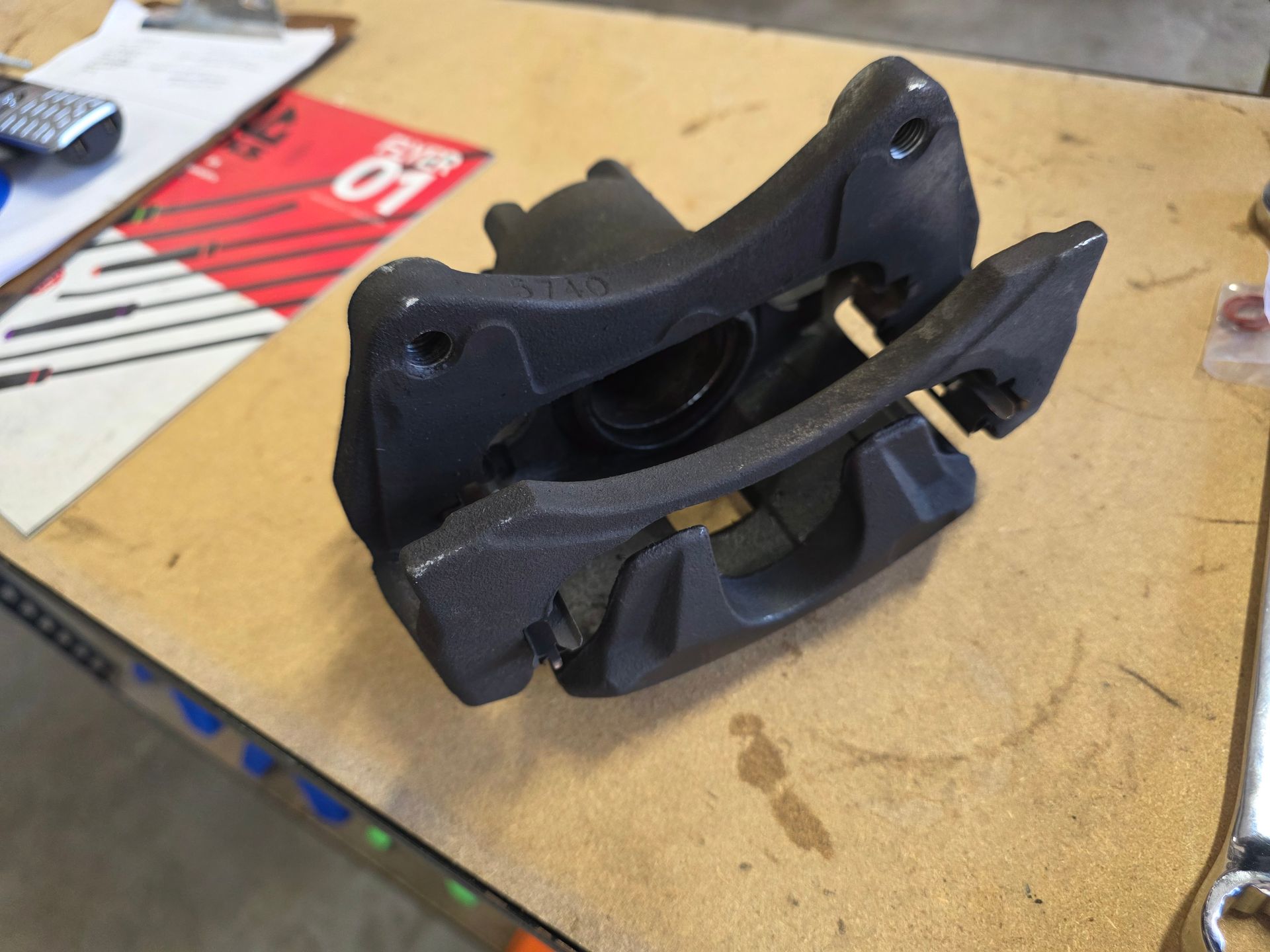
There is a distinct moment every driver dreads: you’re cruising down Texas Avenue, you step on the brake pedal to slow down for a changing light, and suddenly the steering wheel starts violently violently shaking in your hands. It feels like the front end of your car is trying to shake itself apart, but as soon as you let off the pedal, the ride smooths right back out.
As someone who has spent decades managing automotive diagnostics and overseeing complex chassis repairs, I can tell you that a shaking steering wheel is one of the most common complaints we see on the shop floor. It's an unsettling feeling, but it is your vehicle's way of sending an SOS.
When your steering wheel shakes exclusively during braking, it means there is a mechanical pulsation in your braking system that is traveling up through your suspension, into your steering rack, and directly to your hands. Let’s break down exactly what is happening under your wheels, why College Station’s unique driving conditions make it worse, and how a professional diagnostic process fixes it correctly the first time.
The Primary Culprit: "Warped" Brake Rotors (Brake Torque Variation)
Ask almost any driver why their steering wheel shakes when braking, and they will likely tell you, "Your brake rotors are warped." While that’s the common terminology, in the modern shop environment, we look at it through a more precise lens called Brake Torque Variation (BTV).
Your brake rotors are the metal discs that spin along with your wheels. When you step on the brake pedal, your brake calipers squeeze your brake pads against both sides of that spinning rotor to create the friction needed to stop your vehicle.
[Brake Pedal Pressed] ➔ [Caliper Squeezes Pads] ➔ [Contact with Spinning Rotor] ➔ [Vehicle Stops]
True warping—where the metal disc physically bends out of shape like a potato chip—is actually quite rare. Instead, that shaking is usually caused by two specific technical issues:
1. Disc Thickness Variation (DTV)
Over thousands of miles, if a rotor does not spin perfectly true, it will make uneven contact with the brake pads even when you aren't stepping on the brakes. Over time, the pads shave off microscopic amounts of metal from only certain spots on the rotor. Now, the rotor has thin spots and thick spots. When you finally apply the brakes, the pads hit a thick spot, then a thin spot, then a thick spot, thousands of times a minute. That rapid grabbing and releasing transmits a violent pulsation up through your steering column.
2. Uneven Friction Material Deposition
This is highly common in our hot Texas climate. When you drive through stop-and-go traffic on Harvey Mitchell Parkway in the dead of summer, your brakes get incredibly hot. If you have to come to a sudden, hard stop and then hold your foot firmly on the brake pedal while sitting at a red light, the hot brake pad can actually transfer a microscopic layer of its own friction material onto one exact spot on the scorching rotor. This creates an uneven "sticky spot." Every time that spot rotates past the brake pad, it catches, creating a distinct vibration in your steering wheel.
The Local Factor: Why Brazos Valley Driving Accelerates Brake Vibration
Brake systems rely entirely on heat dissipation. They take the kinetic energy of your moving vehicle and convert it into thermal energy (heat).
Operating an auto repair facility in College Station means we see specific environmental factors that put immense stress on local braking systems:
- Extreme Summer Heat: When ambient pavement temperatures soar past 100°F, your brakes start at a much higher baseline temperature. They cannot cool down efficiently between stops, making material deposition and uneven rotor wear much more likely.
- Heavy Stop-and-Go Traffic: Navigating the heavy traffic spikes around the university, especially on game days or during peak afternoon rush hours, means constant, repetitive braking without long stretches of open road to let airflow naturally cool your rotors down.
Beyond the Rotors: Other Critical Components to Check
While rotors are the usual suspect, an experienced diagnostic approach requires looking at the vehicle as a complete, interlocking system. If a shop simply slaps new rotors on your car without looking at the bigger picture, the shaking will often return a few weeks later.
When we evaluate a steering wheel shake, we also meticulously inspect:
- Worn Suspension Bushings: Your control arm bushings are designed to absorb road shock. If these rubber components are torn or degraded, even a minor, normal brake variation will be amplified tenfold, traveling straight up into your steering wheel.
- Stuck Caliper Slide Pins: If the pins that allow your brake caliper to slide back and forth become seized or lose their lubrication, the caliper will only push from one side. This bends the rotor under braking pressure and creates a severe pulsation.
- Hub Runout: If the wheel hub itself—the component the rotor sits on—is rusted or slightly distorted, a brand-new rotor bolted onto it will automatically spin unevenly, guaranteeing a return of the vibration.
How We Solve Brake Shaking: The Professional Inspection Process
Fixing a braking issue isn't about guesswork or throwing parts at a symptom; it's about rigorous oversight and manufacturer-specific procedures. When a vehicle comes into our shop with a front-end shake, our technicians follow a strict quality protocol:
Step 1: Precision Measurements
We don't just look at a rotor and assume it's bad. We use a specialized tool called a micrometer to measure the thickness of the rotor at multiple points around the disc to verify Disc Thickness Variation down to the thousandth of an inch. We also use a dial indicator to check for "runout"—ensuring the rotor spins perfectly straight on the hub.
Step 2: Total System Evaluation
We inspect the entire braking and chassis ecosystem. This includes checking the condition of the brake fluid for moisture content, evaluating pad wear patterns to ensure the calipers are operating smoothly, and prying on suspension components to verify ball joints and bushings are tight.
Step 3: Premium Component Selection & Service
If the rotors are below the manufacturer’s minimum thickness safety specifications, or if severe material deposition has occurred, they must be replaced or machined on a precision brake lathe. We always recommend pairing high-quality, premium friction material pads with matching rotors to ensure proper heat dissipation and noise-free operation.
Step 4: Proper Pad Bedding
Before delivering any vehicle back to a customer, our technicians perform a proper "bedding-in" procedure. This involves a series of controlled stops that gently heats the new pads and deposits a perfectly uniform, microscopic layer of friction material across the new rotors, sealing them against future hot spots.
Don't Ignore the Shake: Take Action Today
A shaking steering wheel isn't just an annoyance; it is a safety hazard. Over time, that constant vibration acts like a hammer against your steering rack, wheel bearings, and suspension components, turning a standard brake service into a much more expensive mechanical repair. More importantly, uneven brake wear compromises your vehicle’s stopping distance in emergency situations.
If you are tired of white-knuckling your steering wheel every time you slow down, let our experienced team perform a transparent, thorough evaluation.
You can learn more about our complete line of domestic and import repair options by visiting our professional brake repair in College Station service page, where we detail our commitment to using manufacturer-specific procedures.
Ready to get your vehicle riding smoothly again? Schedule an inspection with us or visit our shop on Google Maps to get precise directions to our facility. We'll get under the wheels, identify the exact root cause, and ensure your vehicle has the reliable stopping power you need.