Complete Guide to Auto Brake Repair in College Station: Costs, Diagnostics, and Local Wear Factors

proadAccountId-389775 • October 13, 2026

Complete Guide to Auto Brake Repair in College Station: Costs, Diagnostics, and Local Wear Factors

Navigating vehicle maintenance in the Brazos Valley requires understanding local driving conditions, technical specifications, and mechanical performance metrics. Whether you commute along Harvey Mitchell Parkway, navigate campus traffic around Texas A&M University, or travel down State Highway 6, your vehicle's braking system remains your most critical safety feature. This comprehensive guide provides everything College Station and Bryan drivers need to know about professional brake service, local cost benchmarks, independent shop safety standards, and advanced diagnostic protocols.

Article Reviewed By: Alexander Gonter (Owner) & Jay (Lead Technician)

Backed by hands-on diagnostic experience and strict adherence to transparent digital vehicle inspections in College Station, TX.

How Do You Know When Your Car Needs Brake Service?

A vehicle requires immediate brake service if it exhibits audible squealing or grinding, pedal pulsation during braking, a soft or spongy pedal feeling, or an increased stopping distance. Mechanical wear indicators produce a squeal when pads reach 3/32 of an inch. Tactile vibrations indicate Disc Thickness Variation across the rotors. Spongy pedal response indicates air or moisture contamination within hydraulic lines.

Observed Vehicle Symptom Matrix

Observed Vehicle Symptom Primary Mechanical Root Cause Safety Risk Assessment Corrective Technical Action
High-Pitched Acoustic Squealing Wear indicator tab contacting rotor face (< 3/32" pad remaining) Moderate Replace brake pad set; evaluate rotor thickness
Heavy Metallic Grinding Complete pad exhaustion; steel backing plate grinding rotor Critical Replace pads and rotors; inspect caliper piston face
Pedal Pulsation / Steering Shake Disc Thickness Variation (DTV) or lateral runout High Resurface rotors if above discard limit, or replace
Spongy / Sinking Brake Pedal Air/moisture in hydraulic lines, or master cylinder internal bypass Critical Pressure bleed hydraulic system or replace master cylinder
Hard Pedal (Loss of Assist) Vacuum brake booster diaphragm failure or check valve fault High Test booster vacuum retention; replace booster unit
Vehicle Pulls During Braking Seized caliper slide pin, stuck caliper piston, or restricted line High Overhaul caliper assembly; replace flexible rubber hoses

Environmental Stressors in Brazos County

Automotive braking systems in the Bryan-College Station metropolitan area experience specific mechanical stressors driven by regional geography, climate patterns, and traffic infrastructure. High-density stop-and-go corridors—such as Texas Avenue, Harvey Mitchell Parkway (FM 2818), and University Drive—subject brake pads to repetitive thermal cycling without sufficient cooling intervals between engagements. The regional climate in Brazos County introduces ambient summer temperatures exceeding 95°F to 100°F, elevating asphalt surface temperatures above 140°F and inhibiting radiative heat dissipation from brake rotors. Sustained elevated operating temperatures accelerate friction material degradation, promote surface glazing on pads, and increase the risk of Disc Thickness Variation.

Furthermore, the Texas A&M University student demographic introduces distinct driving profiles, including prolonged vehicle idling, short-distance commutes that prevent complete moisture evaporation within hydraulic systems, and delayed routine maintenance. The high-speed transit corridors surrounding the Brazos Valley, including State Highway 6 and State Highway 47, regularly see traffic moving at 70 to 75 mph. Decelerating from these speeds under high thermal loads places substantial demand on friction materials and hydraulic fluid integrity.

Diagnostic Symptoms and Mechanical Evaluation Protocols

Identifying brake issues relies on evaluating acoustic, tactile, and hydraulic symptoms. Squealing indicates that internal wear indicator tabs are contacting the rotor surface, while grinding signals complete friction material failure. Pedal pulsation stems from rotor thickness variations, and spongy pedals point to hydraulic line contamination.

Brake friction pads incorporate mechanical wear indicators—thin spring-steel tabs attached to the backing plate designed to contact the rotor face when pad thickness diminishes to approximately 2/32 to 3/32 of an inch. This produces a distinct high-pitched acoustic squeal under wheel rotation. Continuous grinding noises signify complete friction material exhaustion, where the steel backing plate contacts the cast-iron rotor directly, causing rapid structural scoring and demanding immediate component replacement.

Tactile feedback through the brake pedal provides critical diagnostic insight into mechanical alignment and hydraulic health. Pulsation felt through the pedal during deceleration directly indicates Disc Thickness Variation or excessive lateral runout in the brake rotors, rather than physical warping of the entire iron disc. A soft or spongy brake pedal response signals hydraulic system compromise, such as moisture contamination lowering the boiling point of the brake fluid, entrained air bubbles in the hydraulic lines, or internal fluid bypass within the master cylinder assembly. A hard pedal requiring high foot pressure indicates a loss of vacuum assist from the power brake booster or a failed booster check valve.

Should You Resurface or Replace Your Brake Rotors?

Brake rotors can be resurfaced if their post-machining thickness remains 0.015 to 0.030 of an inch above the stamped discard limit, and lateral runout is under 0.002 inches. If rotors exhibit deep scoring over 0.060 inches, thermal cracking, or Disc Thickness Variation exceeding 0.0005 inches, complete replacement with high-carbon iron rotors is required to maintain safety and prevent pedal pulsation.

Rotor Machining vs. Replacement Tolerances

Technical Parameter Precision Tool Maximum Specification Corrective Engineering Action
Disc Thickness Variation Outside Micrometer ≤ 0.0005" (0.012 mm) Machine surface flat or replace rotor
Lateral Runout Dial Indicator & Stand ≤ 0.002" (0.05 mm) Clean hub surface corrosion or replace rotor
Post-Cut Thickness Buffer Digital Micrometer ≥ 0.015"–0.030" above discard Mandatory replacement if buffer is unachievable
Surface Scoring Depth Depth Micrometer ≤ 0.060" max depth Mandatory replacement if grooves exceed limit

Cast-iron brake rotors function as primary thermal heat sinks. When brake pads clamp down on the spinning rotor, kinetic energy converts into immense thermal energy. Resurfacing removes a precise micro-layer of iron on a brake lathe to eliminate scoring, rust ridges, or light runout. However, reducing the physical mass of the rotor decreases its total heat dissipation capability. In environments like Brazos County, thin rotors overheat rapidly, leading to micro-cracking, severe glaze formation, and rapid recurrence of pedal pulsation.

Before machining, a technician uses a micrometer to measure disc thickness across multiple points along the friction plate. Cast on the inner hub or outer edge of every rotor is the manufacturer's discard specification. The final cut on the brake lathe must leave the rotor at least 0.015 to 0.030 of an inch above this discard threshold to ensure safe operation over the lifespan of the new pads.

How Much Does Brake Service Cost in College Station, TX?

Complete brake repair in College Station typically ranges from $199 to $220 per axle for pad-only service, while complete axle packages including brand-new high-carbon rotors and ceramic pads range from $350 to $750. Hydraulic brake fluid flushes cost approximately $90, while major master cylinder repairs range from $350 to $650.

Local Service Tier Pricing & Specifications

Service Tier / Category Component Scope & Hardware Specifications College Station Market Price Range Est. Service Time
Digital Brake Check Physical pad measurement, fluid analysis, photo report Free to $46.00 30 Minutes
Standard Pad Replacement Front or rear ceramic pads, basic hardware cleaning $199.99 – $220.00 / axle 45 – 60 Minutes
Daily Driver Package NAPA SilentGuard™ pads, new standard rotors, hardware $350.00 – $425.00 / axle 60 – 90 Minutes
Ultra-Premium Package Akebono® ceramic pads, high-carbon rotors, synthetic lube $575.00 – $750.00 / axle 60 – 90 Minutes
Hydraulic Fluid Flush Full vacuum flush, moisture removal, DOT 3/4 refill $89.99 – $90.00 total 30 – 45 Minutes
Master Cylinder Assembly New master cylinder, bench bleeding, pedal calibration $350.00 – $650.00 total 2 – 3 Hours

What Steps Are Included in a Professional Brake Service Protocol?

A professional brake service includes a digital caliper inspection, wheel hub rust remediation, hardware replacement, slide-pin lubrication with synthetic ceramic grease, precision torque tightening, hydraulic bleeding, and a thermal bedding-in test drive. Reusing old hardware or failing to clean hub contact surfaces leads to noise, uneven wear, and premature braking failure.
  • 1. Digital Assessment & Precision Measurement: Technicians measure remaining pad life in millimeters and rotor thickness in thousandths of an inch using digital micrometers to generate transparent photo evidence.
  • 2. Component Disassembly & Hub Remediation: Wheels, calipers, and rotors are removed. Wheel mounting hubs are thoroughly wire-brushed and descaled down to bare metal to eliminate lateral runout caused by surface corrosion.
  • 3. Caliper Hardware & Slide Pin Servicing: Caliper slide pins are cleaned, inspected for pitting, and lubricated with high-temperature synthetic ceramic grease to ensure even pad clamping pressure.
  • 4. Rotor & Pad Assembly Installation: Brand-new high-carbon iron rotors and OE-specification ceramic friction pads are installed alongside fresh stainless steel abutment hardware clips.
  • 5. Hydraulic Pressure Bleed & EPB Calibration: Brake fluid is pressure-bled to eliminate air and moisture. For vehicles equipped with Electronic Parking Brakes (EPB), diagnostic scan tools retract and recalibrate internal actuator motors.
  • 6. Dynamic Road Test & Thermal Bedding-In: A technician performs controlled vehicle deceleration cycles to heat-cycle the friction material into the new rotor surface, ensuring quiet, chatter-free operation.

Need Your Brakes Inspected in College Station?

Get transparent digital photo reports, 60–90 minute turnarounds, and upfront pricing.

Schedule Your Brake Service Online

Frequently Asked Questions About Brake Repair in College Station

How long do brake pads last in College Station traffic?

In stop-and-go Brazos Valley traffic, standard brake pads last between 30,000 and 50,000 miles. Aggressive driving, frequent towing, or operating heavy vehicles around campus can shorten pad life to under 25,000 miles.

Why do my new brakes squeak after installation?

Temporary squeaking occurs if new pads are not properly bedded-in, or if moisture forms light surface oxidation on cast-iron rotors overnight. Persistent squealing indicates reused hardware clips or dry caliper slide pins.

Can I replace brake pads without replacing or turning the rotors?

Installing new pads on worn rotors ("pad-topping") is acceptable only if rotors exceed minimum discard thickness, exhibit less than 0.0005 inches of variation, and show no deep scoring. Installing new pads over damaged rotors causes immediate squealing and rapid pad wear.

How long does a full brake job take at a local shop?

Traditional auto repair shops complete axle service in 2 to 4 hours. Specialized independent facilities utilizing dedicated brake bays complete comprehensive pad and rotor replacements in 60 to 90 minutes.
By proadAccountId-389775 • June 15, 2026
Why Is My Steering Wheel Shaking When I Brake? A College Station Driver’s Guide
June 6, 2026
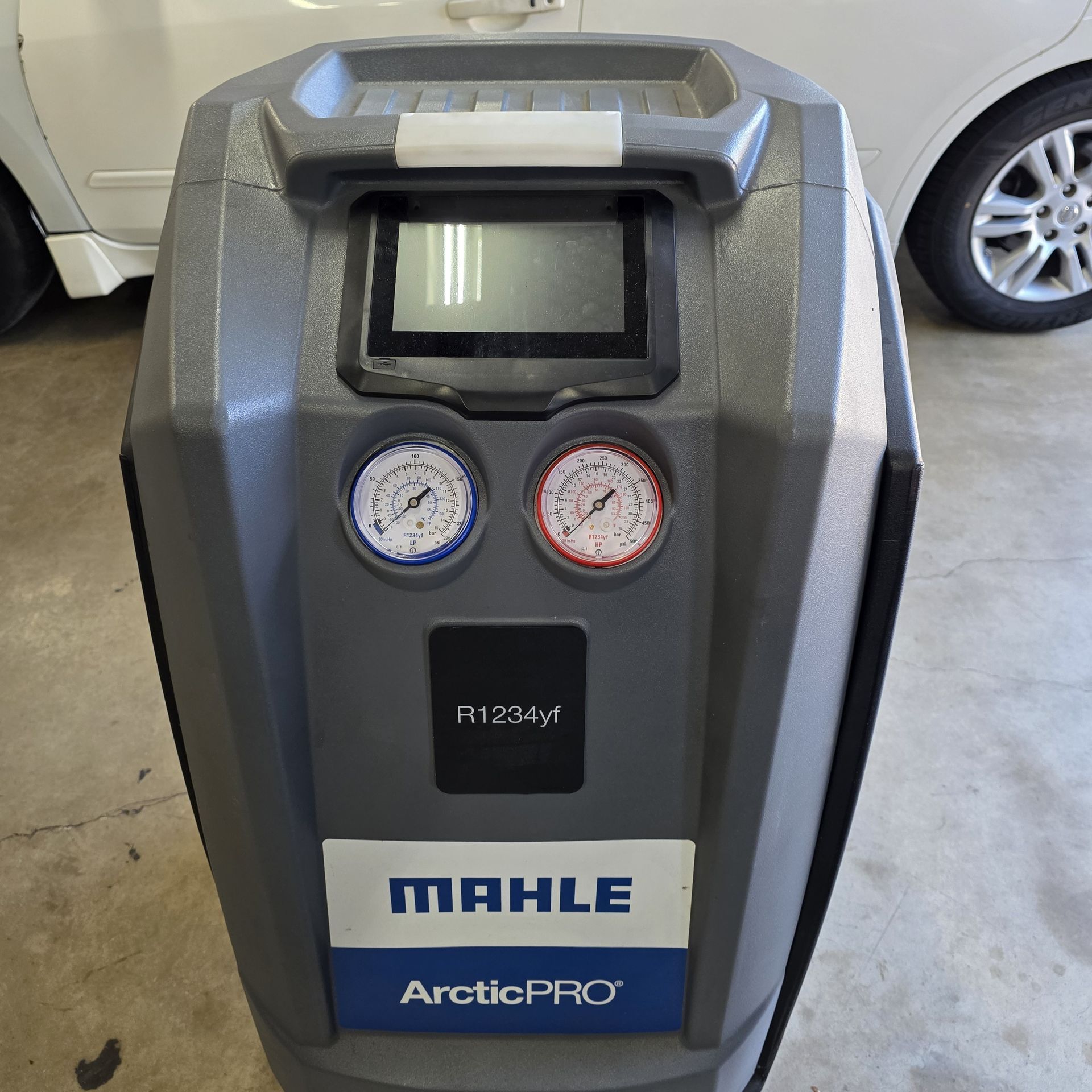
The Hidden Cost of $35 AC Cans: Why DIY Freon Can Kill Your Car’s Air Conditioning We’ve all been there. It’s mid-July in Texas, the thermometer is pushing triple digits, and your car ac blowing hot air makes the cabin feel like a literal pizza oven. Your immediate instinct? Open your phone, look up auto ac repair near me , and brace for a massive bill. But then you see it: a row of bright, $35 "DIY AC Recharge" cans at the local auto parts store promising a cheap, five-minute fix. It looks incredibly simple. You just snap on a plastic quick-connect hose, pull the trigger, and save yourself a trip to the shop. Here is the hard, unvarnished truth from a master diagnostic technician: that $35 can is the most expensive gamble you can make with your vehicle. Trying to bypass a real repair with an over-the-counter chemical band-aid can easily cause a $1,500 catastrophic system failure before the week is out. Driving Blind: The Low-Side Pressure Illusion Your car’s air conditioning isn't just a basic fan blowing over cold liquid. It’s a highly sophisticated, closed-loop network split into two critical halves: the low-pressure side (where heat is absorbed from the cabin) and the high-pressure side (where the compressor pumps and condenses that heat away). These two sides rely on a delicate balance. To service or diagnose an AC system safely, a technician must monitor both pressures simultaneously. Those $35 store-bought cans? They only have a single, cheap mechanical gauge that hooks exclusively onto your low-side service port. Charging your AC this way is the mechanical equivalent of driving down the highway blindfolded. You are missing half of the equation. While the low-side gauge might show a deceptively normal reading, your high-side pressure could be dangerously skyrocketing behind the scenes due to a bad cooling fan, a clogged condenser, or an internal blockage. Dumping more refrigerant into that mix without seeing the high-side reality is a fast track to blowing out lines, popping pressure relief valves, or destroying your compressor entirely. "Automotive AC systems are sealed loops—they don't consume freon like an engine consumes oil. If your system is low, you have a physical leak that requires a targeted diagnosis, not an unmetered chemical top-off." Two Ways a $35 Can Destroys Your AC When a driver blindly introduces store-bought freon into an already unstable system, it usually triggers one of two severe mechanical disasters: 1. Liquid Slugging (Compressor Suicide) Modern vehicles operate on remarkably tight tolerances. Instead of the heavy-capacity systems of the past, today's automotive loops require a highly precise volume of refrigerant—often specified down to the exact individual gram weight. When you try to eyeball it using a generic, color-coded gauge, you almost always overcharge the system. This leads to a nightmare scenario called "liquid slugging". Your AC compressor is engineered strictly to compress refrigerant in its gaseous state. Gasses compress easily; liquids do not. When an overcharged system forces liquid refrigerant back down into the compressor intake, the compressor tries to squeeze a solid volume. The internal reed valves shatter instantly, pistons snap, and the entire compressor suffers total structural failure. This internal explosion flings sharp metallic shrapnel screaming through your lines, permanently contaminating every single component in the loop. 2. The Nightmare of Chemical "Leak Sealant" Gunk To make their products more appealing, DIY chemical manufacturers love to pack their canisters with proprietary "stop-leak" compounds. They claim it seals small leaks from the inside out. Sounds great on paper, but it is a death sentence for your climate control network. These chemical sealants are engineered to react with air and moisture to form a hard, epoxy-like scab. Guess what happens when your AC system has a physical leak? Atmospheric air and humidity migrate inside through the opening. The moment that DIY chemical hits the internal moisture, it hardens into a thick, glue-like sludge. It permanently clogs the microscopic passages of your expansion valve, blankets the internal walls of the evaporator core, and chokes the condenser. Worse yet, this sticky contaminant completely ruins professional recovery equipment. Independent shops must test for these sealants before connecting their machines. If stop-leak is detected, the shop will refuse to service the vehicle until you replace the entire contaminated system at an immense material cost, because hookups would destroy their multi-thousand-dollar equipment. The New Car Dilemma: R134a vs. R1234yf If your car was built over the last decade, the stakes are even higher. While older cars widely utilized R134a refrigerant, nearly all vehicles manufactured after 2015 have transitioned to a highly engineered, eco-friendly chemical compound known as R1234yf. Executing an r1234yf ac service requires an entirely different tier of technical competence and specialized equipment. This modern refrigerant is incredibly sensitive to minor variations in system volume. Trying to hack a post-2015 system with a generic parts-store can can instantly throw the vehicle's onboard climate computer into a hard fault code, bricking the entire climate control network and invalidating your factory or extended warranty. These systems don't tolerate guesswork; they demand automated Recovery, Recycling, and Recharging (RRR) stations to manage the loop under exact parameters. Conclusion: A Diagnostic Test is Cheap Insurance When your vents start blowing warm, a vehicle diagnostic test isn’t an unnecessary expense—it is the ultimate form of low-cost insurance for your car’s longevity. A simple pressure drop could be caused by an electrical relay failure, a blown fuse, a failing cooling fan, or a tiny O-ring leak that costs pennies to swap out. Dumping a DIY can into a system with an underlying electrical issue won't fix a thing; it will just result in an expensive overcharged blowout. When you schedule a definitive car ac recharge college station service at a premier independent facility, our master technicians take the guesswork completely out of the equation. We don't guess—we measure: We isolate and record both high and low-side pressures simultaneously. We safely extract and filter your remaining refrigerant to measure the exact volume loss. We inject specialized UV contrast dye to pinpoint the exact root cause of the leak. We run a prolonged deep vacuum to boil out destructive moisture before recharging the loop back to the exact OEM factory gram specification. Don't Suffer Through the Texas Summer Heat. If your AC is not blowing cold, set up an appointment, or give us a call today! Do not gamble your compressor, your climate control network, and your hard-earned money on a temporary chemical quick fix. If your AC is losing its edge, let our master diagnostic technicians restore your system safely, correctly, and permanently. Text our service desk directly or book your precision AC diagnostic appointment online now before the next major heatwave catches you off guard.
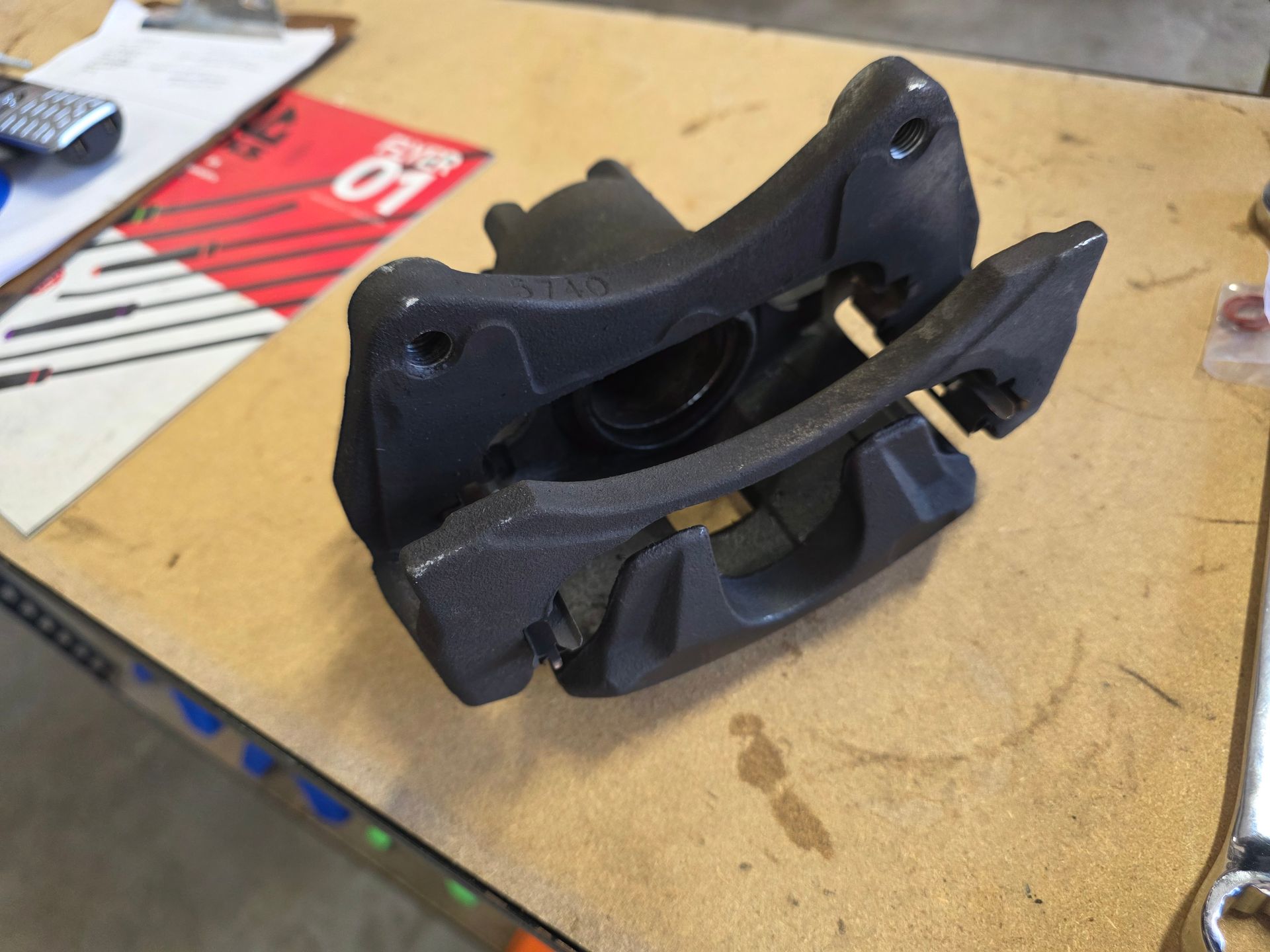
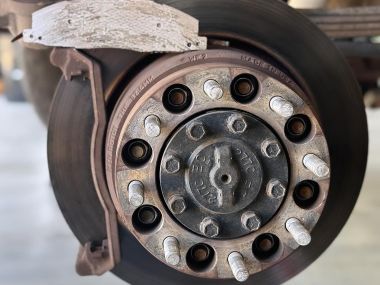
Seized brake caliper
April 23, 2026
Avoid overpriced brake repairs in College Station. Learn the 4 red flags of dishonest shops, from "magic" price hikes to unnecessary parts, and see how Quicker Sticker does it differently.
Quicker Sticker Modern Auto Repair's Full Service Maintenance
April 21, 2026
Learn the difference between conventional, synthetic blend, full synthetic, and 100% synthetic oil changes. Quicker Sticker in College Station explains which oil protects your engine best.
By proadAccountId-389775 • March 24, 2026
The Hidden Cost of the "Brake Slap": Why Surface Preparation is Non-Negotiable
February 4, 2026
Don't be fooled by a logo. Learn the difference between a true ASE Blue Seal shop and competitors using the "One-Tech Loophole." See why Digital Video Evidence is the only trust signal that matters.
January 15, 2026
Confused about the 2025 Texas inspection laws? If your car is registered in Houston or Dallas but lives in College Station, read this before you drive home for a test.
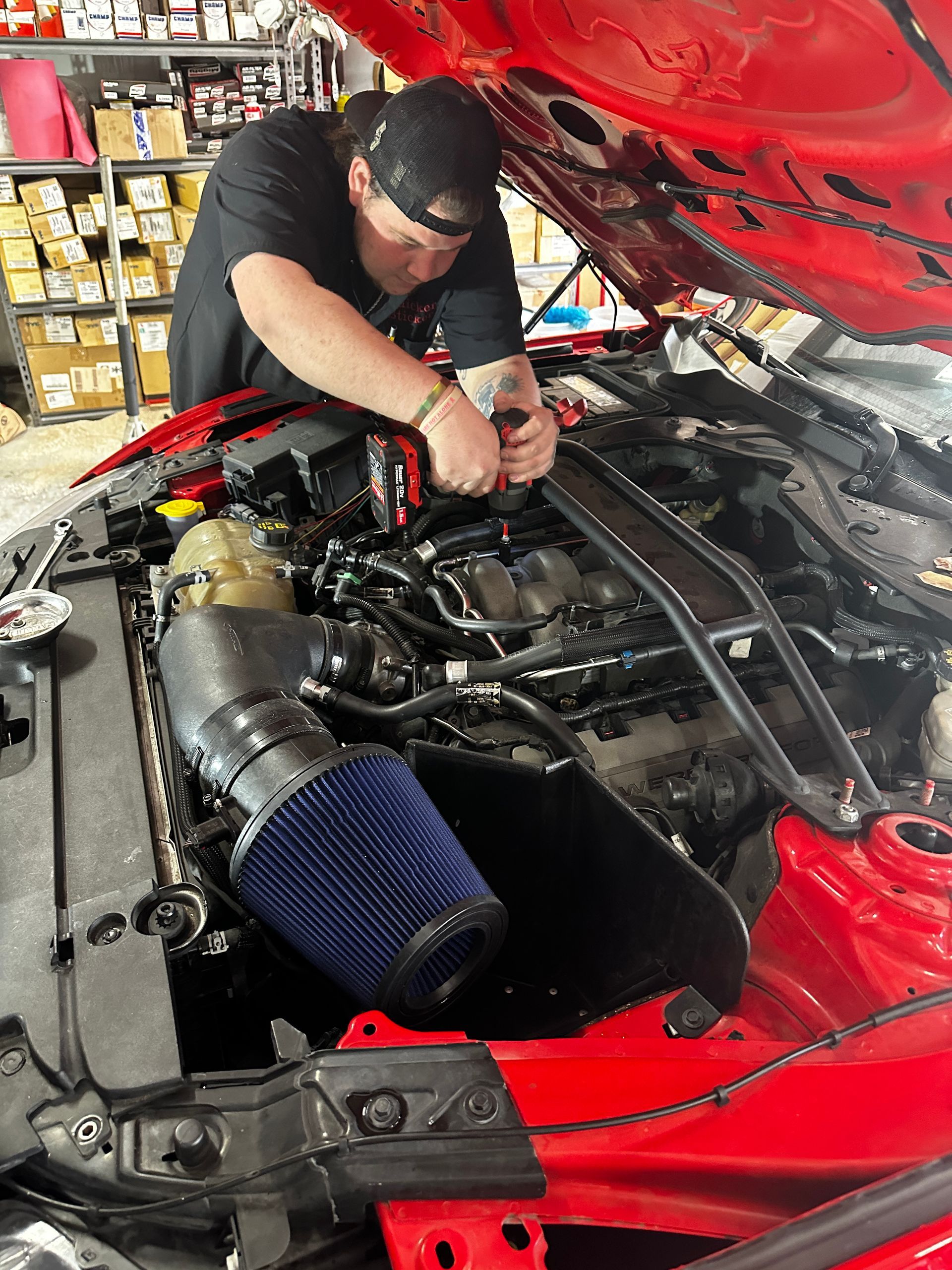
Technician performing repairs on vehicle
January 5, 2026
Most shops claim perfection. We claim honesty. Read the story of the $3,000 mistake Quicker Sticker made, and why finding a mechanic who admits fault is the safest choice for your car.
December 29, 2025
More Than an Oil Change: Why Modern Tech & Modern Mechanics Agree on Full-Service